How much food does Qatar waste? The sourced numbers and where waste starts
By Asaad Al Hashmi, Founder and CEO of Wady

Qatar's households waste about 93 kg of food per person a year, or about 250,830 tonnes, according to UNEP's Food Waste Index Report 2024, which rates the figure high confidence and takes it from a 2022 household study in Doha. In Ramadan, 25% of the food prepared at home goes to waste, according to the same 2022 study. Restaurants, hotels and the supply chain have no national figure yet, and a national study was due to run until September 2026, and we found no published results as of October 2026.
Spread over a year, 93 kg is close to 1.8 kg for every person, every week. Food a farmer grew, a ship carried across the sea and someone cooked with care, then carried out in a black bag. Nobody plans it. It happens a little at a time, in homes and kitchens across the country.
Checked October 2026. Below: Ramadan, comparisons, where food is lost, what Qatar is doing, and six steps for a kitchen.
We are Wady. We make the free Purchase System and Wady Central for kitchens in Qatar, so the last part of this guide shows where Wady helps with food waste and where it does not.
Key takeaways
Households in Qatar waste about 93 kg of food per person a year, about 250,830 tonnes in all (UNEP, 2022 data, high confidence).
In Ramadan, 25% of the food prepared at home in Qatar goes to waste, according to the same 2022 study.
Qatar's 93 kg sits below the West Asia household average of 116 kg and above the world household average of 79 kg.
Restaurants, hotels and the supply chain have no national number yet; a Qatar University study with the Ministry of Municipality, FAO and UNEP was due to run until September 2026, and results are not yet published.

Food waste in Qatar in numbers: 93 kg per person a year at home, 25% of food prepared in Ramadan, 250,830 tonnes a year, and national study results not yet published.
How much food does Qatar waste?
Qatar's households waste about 93 kg of food per person a year, about 250,830 tonnes in all. The figure comes from data collected in 2022 and covers homes only.
The household number: 93 kg per person
UNEP's Food Waste Index Report 2024 rates Qatar's figure high confidence. In West Asia, only Saudi Arabia and Qatar have data with that rating, which UNEP calls suitable for tracking over time.
Who measured it: the Ministry of Municipality's Food Security Department with UNEP's West Asia office (The Peninsula, April 2022).
How: 437 households in 10 zones, in two rounds in 2022, one of them in Ramadan, scaled to a full year and by type of housing.
What it leaves out: restaurants, hotels, shops and farms.
UNEP's 2021 report gave Qatar 95 kg, a low confidence estimate modelled from 2019 data. The 2024 figure replaces it because the 2022 study weighed real household waste.
Ramadan: 25% of food prepared at home
In Ramadan, 25% of the food prepared in Qatar's homes goes to waste, according to the 2022 household study as reported by UNEP's GO4SDGs platform in April 2024. More in Ramadan food waste in Qatar and how to plan better.
A host who cooks for more guests than arrive is showing care, and planning dishes for the real number keeps that care with less left over.
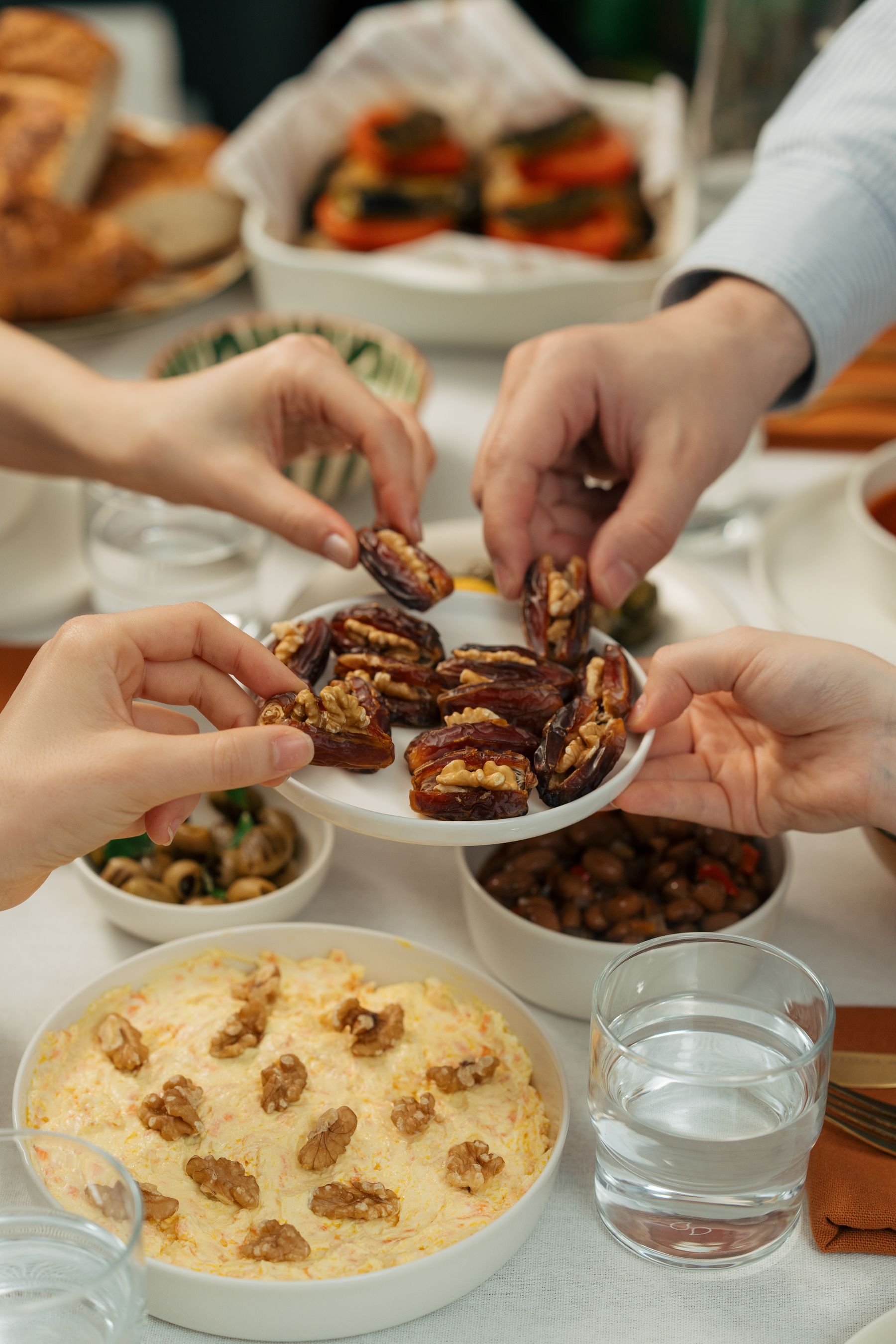
Iftar is a shared table, and the 2022 Doha study found that 25% of the food prepared at home in Ramadan goes to waste.
How does Qatar compare with the region and the world?
Qatar: 93 kg per person a year at home (2022 data).
West Asia: 116 kg, the average of 9 countries' studies (UNEP, 2024).
World: 79 kg (2022 data, same report).
GCC, whole chain: about 150 kg per person, a 2025 consultancy estimate from Oliver Wyman that also counts shops and food service.
Why this guide skips the older, bigger numbers
Older news stories quote much bigger per-person figures for Qatar. The most quoted one dates from 2012 and adds food eaten to food wasted, so it measures something else. This guide uses the 2024 UNEP figure because its study weighed what households threw away.
Why is food waste higher in the Gulf?
Households in West Asia waste 116 kg of food per person a year, against 79 kg worldwide (UNEP, 2024). Four things appear to push the Gulf number up: generous shared meals, heat, a long import chain, and orders placed by estimate.
Generous hospitality and big shared dishes
A full platter shows respect in the Gulf. You can keep that respect and the food: cook closer to the guest count, store leftovers safely, and give surplus to a charity.

A full shared platter is a sign of generosity, and cooking closer to the number of guests keeps that generosity with less food left over.
Heat
UNEP found "a slight positive relationship" between a country's average temperature and its household food waste (UNEP, 2024). Hotter countries appear to waste more, and UNEP calls the reasons speculative. More in why food spoils faster in Gulf heat.
A long import chain
By 2015, Qatar imported about 80% of its food, according to the US International Trade Administration. Imported food in the bin also wastes the shipping, packing and cold storage behind it. See what wasted food does to the climate.
Orders placed by estimate
Many kitchens order the same quantities every week from habit, and each link in the chain sees only its own part, so extra stock piles up. Read why restaurants over-order.
Where is food lost before it reaches the table?
Food goes to waste at four points: on the farm and on the road, at the order desk, in the kitchen, and on the plate.
On the farm and in transport
The FAO estimates that 13.3% of the world's food was lost in 2023 between harvest and the shop shelf (FAO, SDG 12.3.1). This stage is food loss, not food waste: see food loss vs food waste.
At the supplier and the order desk
Orders sent on WhatsApp, by phone and from memory leave no clean record to compare with what you used, so surplus sits on the shelf until it expires.
In the kitchen
Restaurants, hotels and caterers made up 28% of the food wasted worldwide at consumer level in 2022, about 290 million of 1.05 billion tonnes (UNEP, 2024). Common causes are over-prep, spoiled stock and batches cooked without orders.

Restaurants, hotels and caterers made up 28% of the food wasted worldwide at consumer level in 2022, so the kitchen is one of the biggest places to cut it.
On the plate
Oversized portions and buffets refilled to closing waste food that was already bought and cooked.
What is Qatar doing about food waste?
Qatar has a 2030 strategy that aims to cut food loss and waste, a national study of the whole supply chain that was due to run to September 2026, and a national programme in preparation.
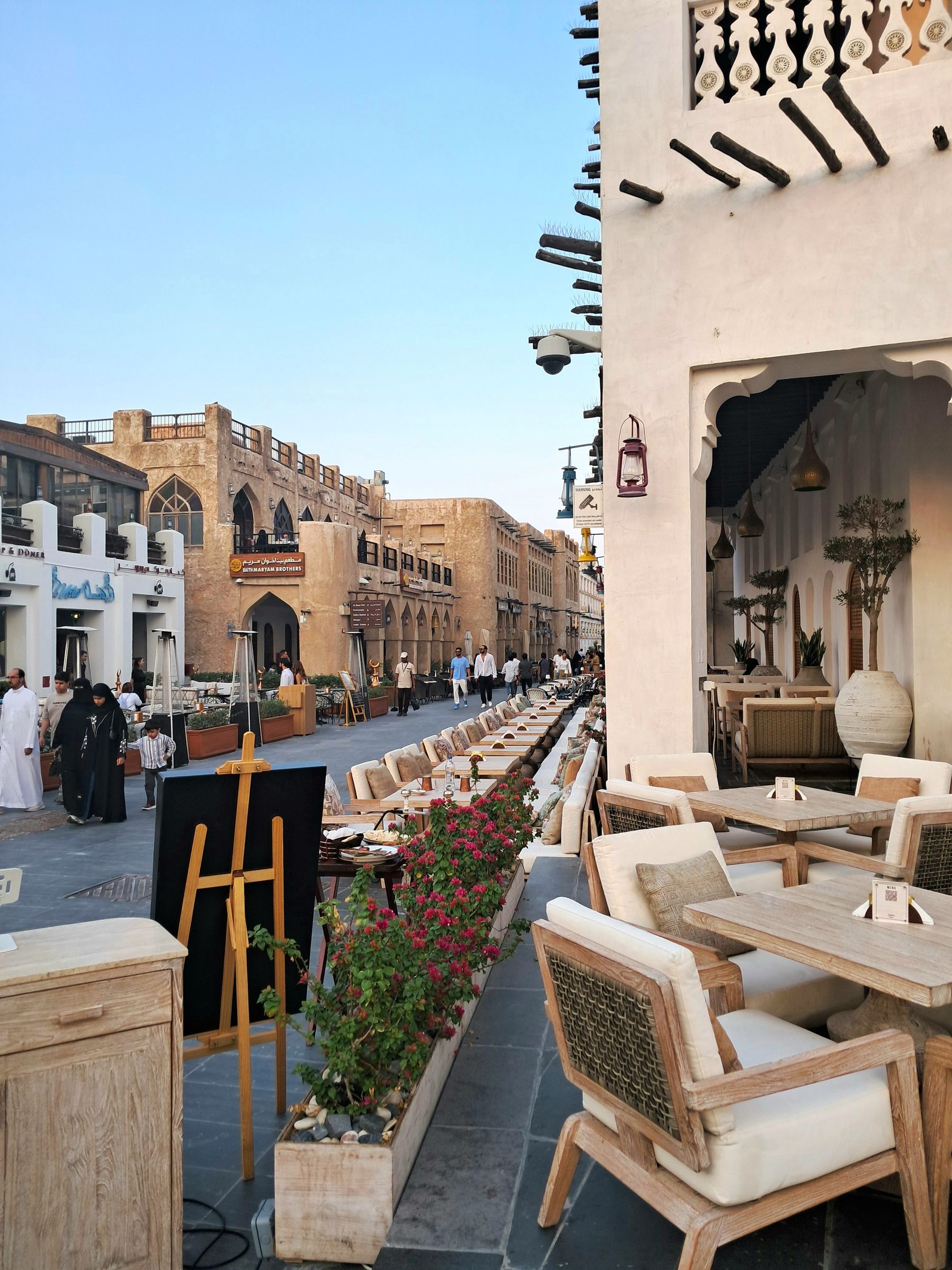
Daily life in Souq Waqif, Doha: food waste here is measured in homes so far, and a national study now covers the whole supply chain.
The National Food Security Strategy 2030
The Prime Minister, HE Sheikh Mohammed bin Abdulrahman bin Jassim Al Thani, launched it in December 2024 (Government Communications Office). It has 17 initiatives and 146 measures, including cutting food loss and waste, and the Ministry of Municipality signed an agreement with Qatar University at the launch to study it (QNA, December 2024). According to Qatar News Agency (QNA, August 2025), quoting the Ministry of Municipality's Food Security Department, the strategy aims to cut the food waste rate by 30%, cut food garbage by 50%, and treat 55% to 70% of food waste and garbage with sustainable solutions. The government launch page gives no figure. More in what the strategy means for restaurants and suppliers.
The national baseline study, 2024 to 2026
Qatar University's Social and Economic Survey Research Institute (SESRI) was running the study with the Ministry of Municipality, the FAO and UNEP, across the whole supply chain, from 17 November 2024, due to end in September 2026 (The Peninsula, April 2026). We found no published results as of October 2026.
The earlier strategy, 2018 to 2023
The earlier strategy aimed to cut food waste by 5 percentage points by 2023, closing half the gap between about 14% waste across Qatar's value chain and about 5% in Europe.
The global goal and a national programme
UN Sustainable Development Goal 12.3 aims to halve food waste by 2030, and UNEP's Food Waste Index tracks it. Qatar's 2022 household figure is one of two in West Asia rated fit for tracking that progress. In June 2026, Undersecretary Eng. Ali bin Mohammed Al Ali said Qatar is preparing "an integrated national program" to reduce food loss and waste (QNA, June 2026). More in SDG 12.3 explained for the Gulf.
Hifz Al Naema and hotels
Hifz Al Naema Centre collects surplus food for people who need it. In February 2025 it saved 21,936 surplus meals and 165,990 kg of food (The Peninsula, March 2025). In hotels, a 2023 Sustainable Ramadan pilot cut food waste by an average of 61% across three hotels, in Doha, Dubai and Riyadh (GO4SDGs, 2024). More in food waste in hotels and catering.
How can a restaurant or hotel cut food waste?
A kitchen cuts food waste by measuring it first, then buying and cooking closer to real demand.
1. Record waste with a reason every shift
Write down what goes in the bin, how much and why, and read the totals by reason and item each week. See how to track food waste. To start, run a one-week food waste audit.
2. Count stock on a schedule
Count your most costly items weekly and everything monthly, to spot what sits too long. See how to do a stock count.
3. Order from real use
Compare last week's order with last week's use, and order the gap to your par level.
4. Plan production from orders minus stock
In a central kitchen, plan each day's batches from orders received minus stock on hand.
5. Size portions and buffets to real covers
Weigh portions at the station, and plan the buffet from expected guests, with smaller trays near closing.
6. Donate safe surplus
Food that is safe and was never served can go to Hifz Al Naema.
For the money side, read how to control food costs in a restaurant.
How Wady helps with food waste
Wady keeps the records steps 1 to 4 need. Over 100 businesses in Qatar already use Wady.
For us this is more than software. Our mission is to cut food waste in the Gulf by digitizing the order between a kitchen and the suppliers it already buys from. Our vision is a Gulf food supply chain where every order is visible, so suppliers and kitchens see demand before it arrives, order what will be used, and throw less away. Food grown for what people will eat, not for a guess. Behind every tomato in the bin there is a farmer, a driver, a supplier and a cook who worked for it, and one tomato's story shows how it gets lost one small step at a time.
What it does
Purchase System (free): all your suppliers in one app, and every order saved with its items, quantities and prices. See the Purchase System.
Waste (Wady Central): a shift's waste in one entry, with your reasons, and waste cost by period, reason and item.
Counts (Wady Central): count on paper or on screen, in sacks and grams.
Production (Wady Central): plan from real orders, minus what is in stock. See Wady Central.
What it does not do
Wady does not forecast demand; every figure is arithmetic on real records. It does not fix a cold chain or change habits by itself, and Wady Central has no POS API connection yet, so it works alongside your POS.
Who it is for
Restaurants, cafes, hotels and catering kitchens in Qatar, from one cafe to a group with a central kitchen. Wady works in Qatar only for now.
Related articles
How to control food costs in a restaurant: 12 practices from supplier to plate (2026)
What is a central kitchen? A guide for restaurant groups in Qatar
What is Wady? The meaning of wadi, and why we named our company after it
See where your kitchen loses food
Message us on WhatsApp at +974 7000 7658 for a Wady Central walkthrough. The free Purchase System is at order.wady.ai, on the App Store and on Google Play. Qatar only for now.
Frequently asked questions
Your kitchen's stock, recipes and costing, with numbers from real records.

Restaurant management
Ramadan food waste in Qatar: why so much is left over, and how to plan better

Restaurant management
Food loss vs food waste: what is the difference, and why it matters for the Gulf

Restaurant management
Qatar's National Food Security Strategy 2030: what it means for restaurants and food suppliers

