What food waste does to the climate: emissions, methane, water, and what one kitchen can do
By Asaad Al Hashmi, Founder and CEO of Wady

Food waste and climate change are linked by hard numbers: food loss and waste "generates 8-10 per cent of annual global greenhouse gas (GHG) emissions", which UNEP puts at "almost 5 times that of the aviation sector" (UNEP, March 2024). Food that rots in a landfill gives off methane, a gas that traps about 80 times more heat than CO2 over 20 years (IPCC, 2021), and UNEP says rotting food makes 14% of the world's methane.
It is 11 at night in a Doha restaurant. A tray of rice and lamb comes back from a table almost full, and a tired cook tips it into the bin in one second. Nobody did anything wrong. Rewind that tray, though, and you find a field watered for months, a ship and a truck from the port, a cold room running all week, and an hour of a cook's work. All of it goes into the black bag with the rice.
Checked October 2026. Below: emissions, methane, water and land, the world's climate plans, Qatar's plan, and five steps for a kitchen.
We are Wady. We make the free Purchase System and Wady Central for kitchens in Qatar, so the last part of this guide shows where Wady helps with food waste and where it does not. Wady does not measure emissions.
Key takeaways
Food loss and waste causes 8 to 10% of global greenhouse gas emissions, almost 5 times the aviation sector (UNEP, 2024, from IPCC data for 2010 to 2016).
Food rotting in landfills makes 14% of the world's methane (UNEP, 2026), and methane from rotting food traps about 80 times more heat than CO2 over 20 years (IPCC, 2021).
Wasted food takes up the equivalent of almost a third of the world's agricultural land (UNEP, 2024) and about 250 km3 of fresh water a year (FAO, 2007 data).
Qatar's climate plan, NDC 3.0 (November 2025), includes reducing per capita food waste among its objectives, and WRAP lists Qatar among about 30 countries with food waste in their climate plans.

One wasted plate carries a share of the 8 to 10% of global emissions that comes from food loss and waste, almost 5 times aviation (UNEP, 2024).
What does one thrown-away plate cost the planet?
A thrown-away plate costs the planet everything it took to grow, move, cool and cook that food, and it adds methane if it ends up in a landfill.
On the farm: water, land, fertiliser and fuel for the crop or the animal.
On the way: the ship, the truck and the cold chain. Qatar's climate plan notes that its "dependence on imported food" raises its exposure to climate shocks in global supply chains (Qatar NDC 3.0, 2025).
In the kitchen: gas, electricity and the cook's time.
In the bin: once food reaches a landfill, it rots and gives off methane.

Food loss and waste causes 8 to 10% of the world's greenhouse gas emissions, so every tray that comes back full carries a climate cost (UNEP, 2024).
How much does food waste add to global emissions?
Food loss and waste adds 8 to 10% of the world's greenhouse gas emissions. UNEP's 2024 report compares that with flying: almost 5 times the emissions of the aviation sector (UNEP, March 2024).
Where the 8 to 10% comes from
The number comes from the IPCC's Special Report on Climate Change and Land (2019). It covers 2010 to 2016, counts both food lost on the way and food wasted at the end, and the IPCC rates it medium confidence.
Why is food in a landfill worse than food on a plate?
Food in a landfill rots without air and gives off methane, a gas that warms the planet far faster than CO2. UNEP says "food rotting in landfills also generates 14 per cent of the world's methane" (UNEP, March 2026).
What is methane, and why do the 20 years matter?
The IPCC's 2021 assessment says methane from non-fossil sources, such as food in a landfill, traps about 80 times more heat than the same weight of CO2 over 20 years, and about 27 times more over 100 years (IPCC AR6, Chapter 7, Table 7.15). Methane breaks down in about 12 years, so cutting it slows warming within a generation.
Why other articles say 84, 86 or 25
Those numbers come from older IPCC reports or from fossil methane; even UNEP's November 2025 release uses 84. This guide uses the IPCC's 2021 value for methane from food.
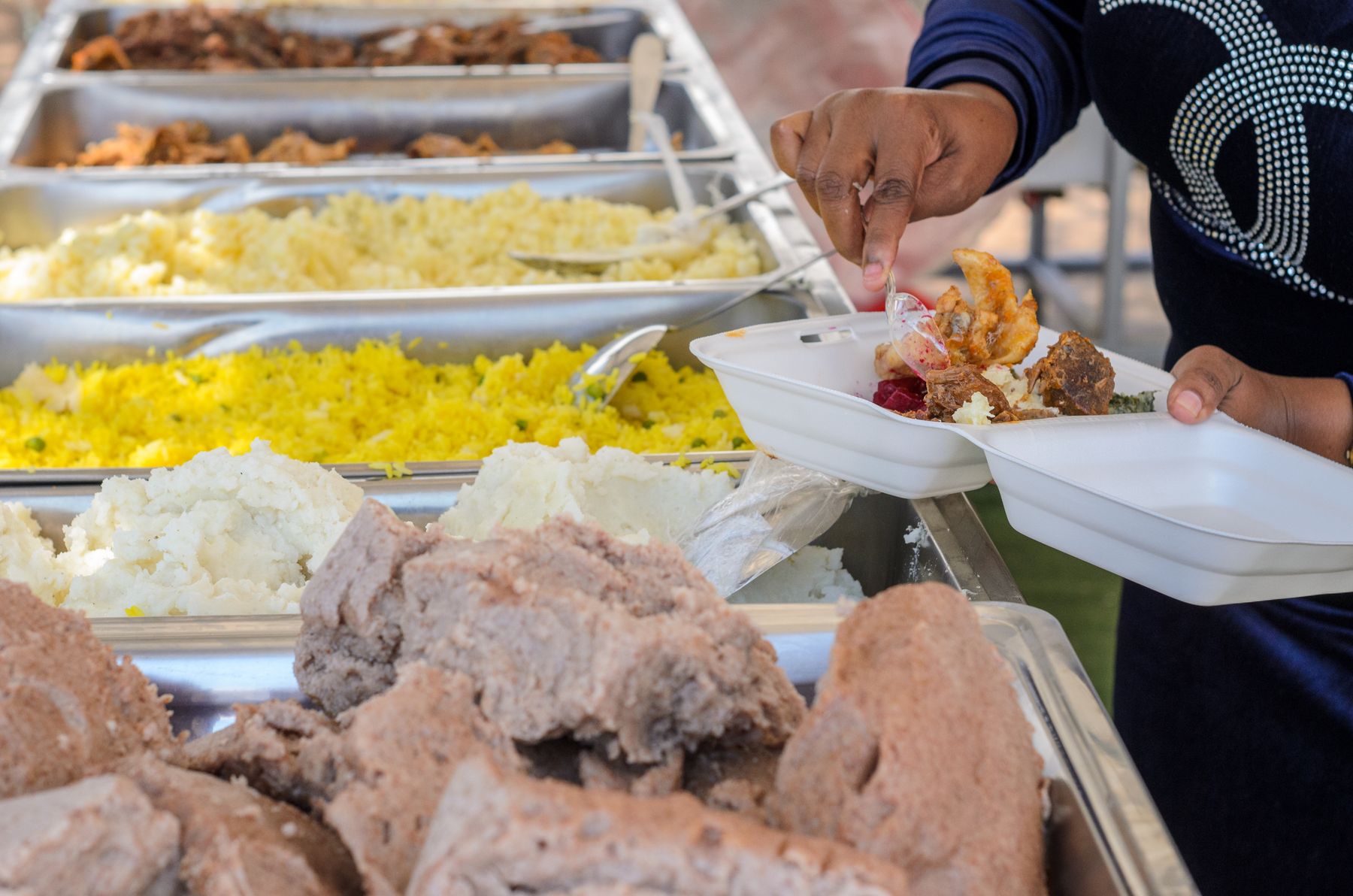
Food left on buffets and plates often ends up in landfills, where rotting food makes 14% of the world's methane (UNEP, 2026).
How much water and land does wasted food use?
Wasted food takes up the equivalent of almost a third of the world's agricultural land, and the FAO's last global count put its fresh water use at about 250 km3 a year.
Land: food loss and waste takes up "the equivalent of almost a third of the world's agricultural land" (UNEP, March 2024).
Water: the blue water footprint of food wasted in 2007 was about 250 km3, about the yearly flow of the Volga river, or three times the volume of Lake Geneva (FAO, 2013). We found no newer global figure from the FAO or UNEP.
Qatar: the NDC says local food production faces "limited arable land, soil salinity, and water scarcity" (Qatar NDC 3.0, 2025).
Do countries count food waste in their climate plans?
Few do. A country's climate plan under the Paris Agreement is called its Nationally Determined Contribution, or NDC.
COP29, 2024: WRAP found that 88% of the countries attending had no commitment on food loss or waste in their NDCs (WRAP, November 2024).
COP30, 2025: 30 countries had committed to tackle food loss or waste in their NDCs as of 29 October 2025, up by six since COP29 (WRAP, November 2025). Qatar is on WRAP's list, under countries that commit to reducing food waste.
Food Waste Breakthrough: launched by UNEP and partners at COP30 in Belém on 13 November 2025, it aims to halve food waste by 2030 and cut up to 7% of methane emissions (UNEP, November 2025).
The halving goal matches UN target 12.3. See SDG 12.3 explained for the Gulf.
What is Qatar doing about food waste and the climate?
Qatar's third climate plan, NDC 3.0, was submitted to the UNFCCC in November 2025, and it includes "reducing per capita food waste" among the 2030 objectives of the national environment and climate strategy (UNFCCC registry).
What the NDC says about waste
The source: "Waste-related GHG emissions mostly emanate from organic waste decomposition and wastewater treatment".
The objectives: the Qatar National Environment and Climate Change Strategy (QNE, October 2021) sets 2030 objectives that include reducing per capita food waste and "encouraging the reduction of food losses along production and supply chains". A national solid waste programme started in 2022 to carry them out.
Landfills: the old Mesaieed and Um Al Afaiee landfills are being closed and rehabilitated.
Waste to energy: Qatar plans to double its waste-to-energy capacity by 2030.
The NDC gives no number for the food waste cut.
What Qatar has measured so far
Households in Qatar waste about 93 kg of food per person a year (UNEP, 2022 data). Restaurants, hotels and the supply chain have no national figure yet; a Qatar University study was due to run until September 2026, and we found no published results as of October 2026 (The Peninsula, April 2026). The full picture is in how much food Qatar wastes.
What can one kitchen do about food waste and climate change?
A kitchen cuts its climate cost by knowing what it throws away and buying closer to what it will cook.
1. Measure before you cut
At the end of the night shift, a cook weighs the leftover tray before it goes out and writes it down with a reason. That number is where the climate math starts, one kitchen at a time. Start with a one-week food waste audit, then track waste every shift.

Restaurants, hotels and caterers made up 28% of the food wasted worldwide in 2022, so measuring waste in the kitchen is where a cut starts (UNEP, 2024).
2. Order for what you will cook
Compare last week's order with last week's use, and order the gap. Stock bought by habit is the stock that spoils.
3. Share real orders with your suppliers
At dawn a grower picks tomatoes for an order that was a guess. When a kitchen's real orders reach its supplier, and the supplier's reach the farm, the grower can pick what people will eat. Follow one tomato's journey to see where the rest goes.
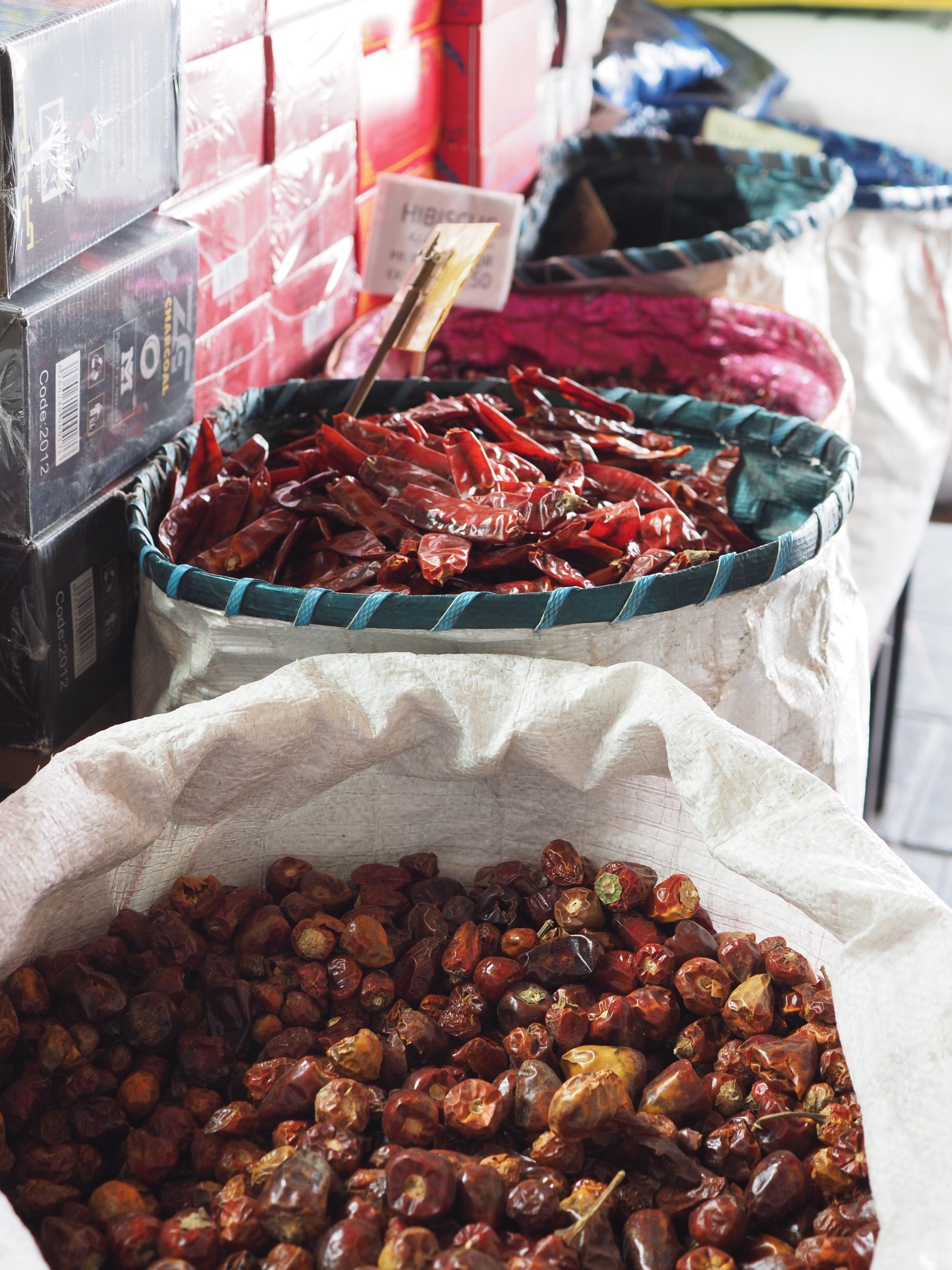
Wasted food takes up the equivalent of almost a third of the world's agricultural land, so an order sized to real demand saves land as well as money (UNEP, 2024).
4. Size buffets and portions to real guests
Hotels can cut plate waste without cutting hospitality. Hilton's Green Ramadan campaign, part of UNEP's Recipe of Change, reported a 26% cut in plate waste across 45 hotels in 14 countries in 2025 (UNEP, March 2026).
5. Keep safe surplus out of the bin
Food that is safe and was never served can go to Hifz Al Naema Centre, which collects surplus food for people who need it. Food that reaches a person never reaches a landfill.
How Wady helps with food waste and its climate cost
Wady keeps the records steps 1 to 3 need: what you ordered, from whom, and what you threw away. Over 100 businesses in Qatar already use Wady.
For us this is more than software. Our mission is to cut food waste in the Gulf by digitizing the order between a kitchen and the suppliers it already buys from. Our vision is a Gulf food supply chain where every order is visible, so suppliers and kitchens see demand before it arrives, order what will be used, and throw less away. Food grown for what people will eat, not for a guess. Less food in the bin means less methane from the landfill and less water and land spent on food nobody eats.
What it does
Purchase System (free): all your suppliers in one app, and every order saved with its items, quantities and prices. See the Purchase System.
Waste (Wady Central): a shift's waste in one entry, with your reasons, and waste cost by period, reason and item. See stock counts and waste.
Counts (Wady Central): count on paper or on screen, in sacks and grams.
Production (Wady Central): plan from real orders, minus what is in stock.
What it does not do
Wady does not calculate carbon or methane, and it does not collect or compost food. It does not forecast demand; every figure is arithmetic on real records. Wady Central has no POS API connection yet, so it works alongside your POS.
Who it is for
Restaurants, cafes, hotels and catering kitchens in Qatar, from one cafe to a group with a central kitchen. Wady works in Qatar only for now.
Related articles
How much food does Qatar waste? The sourced numbers and where waste starts
Food loss vs food waste: what is the difference, and why it matters for the Gulf
SDG 12.3 explained for the Gulf: halving food waste by 2030, and where GCC countries stand
How to measure food waste in a restaurant kitchen: a step-by-step waste audit
Waste less, order what you will cook
Message us on WhatsApp at +974 7000 7658 for a Wady Central walkthrough, or read more on Wady Central. The free Purchase System is at order.wady.ai, on the App Store and on Google Play. Qatar only for now.
Frequently asked questions
Your kitchen's stock, recipes and costing, with numbers from real records.


