SDG 12.3 explained for the Gulf: halving food waste by 2030, and where GCC countries stand
By Asaad Al Hashmi, Founder and CEO of Wady

SDG 12.3 is the UN target to halve food waste per person in shops, restaurants and homes by 2030, and to reduce food loss before food reaches the shop. The UN tracks it with two indicators: the FAO's Food Loss Index and UNEP's Food Waste Index. In the GCC, only Saudi Arabia and Qatar have household food waste figures that UNEP rates fit for tracking, only Saudi Arabia and the UAE publish a 50% food loss and waste goal, and Qatar's waste targets are reported by its news agency, QNA.
After a family lunch in Al Wakra, a grandmother spoons the untouched half of the machboos into boxes for the neighbours. Nobody in that room has read the SDG 12.3 food waste target, set in New York in 2015. Still, the target comes down to that box: food that reaches someone instead of the bin. Halving waste starts as a habit in a kitchen.
Checked October 2026. Below: the target, how it is measured, the six GCC countries, and what a kitchen in Qatar can do.
We are Wady. We make the free Purchase System and Wady Central for kitchens in Qatar, so the last part of this guide shows where Wady helps and where it does not.
Key takeaways
SDG 12.3 asks the world to halve food waste per person at retail and consumer level by 2030, and to reduce food loss along production and supply chains, with no number for loss.
UNEP puts household food waste at 132 kg per person a year in Bahrain, 105 in Saudi Arabia, 99 in Kuwait, Oman and the UAE, and 93 in Qatar, against a world average of 79 kg.
Only the Saudi and Qatari figures are rated high confidence; the 99 kg for Kuwait, Oman and the UAE is a model built from other countries, so it cannot rank them.
The UAE's ne'ma states a 50% cut in food loss and waste by 2030, Saudipedia reports a 50% Saudi goal, QNA reports Qatar targets of a 30% cut in the food waste rate and a 50% cut in food garbage, and Kuwait, Oman and Bahrain publish no percentage target.

Every GCC country sits above the world household average of 79 kg per person a year, but only the Saudi and Qatari figures come from measured national studies (UNEP, 2024).
What does SDG 12.3 say about food waste, word for word?
Target 12.3 of the UN Sustainable Development Goals has one sentence with two parts: a number for waste and a direction for loss.
The official text
The UN's wording: "By 2030, halve per capita global food waste at the retail and consumer levels and reduce food losses along production and supply chains, including post-harvest losses" (UN DESA, Goal 12).
Waste gets a number, loss gets a direction
Food waste: halve it per person, in shops, food service and homes.
Food loss: reduce it, from the farm through storage, transport and wholesale. The text gives no figure.
The line between the two sits at the shop shelf. For the full definitions, read food loss vs food waste.

Households cause most of the food waste that SDG 12.3 asks countries to halve, and in Qatar homes waste about 93 kg per person a year (UNEP, 2022 data).
How is SDG 12.3 measured?
The UN measures target 12.3 with indicator 12.3.1, split in two: (a) the Food Loss Index and (b) the Food Waste Index (UN DESA, Goal 12).
The two indicators
12.3.1(a), Food Loss Index, run by the FAO: food lost after harvest "up to but not including retail".
12.3.1(b), Food Waste Index, run by UNEP: waste at "retail and consumer levels (food service and households)", so restaurants, hotels and catering kitchens count.
Both scopes come from UNEP's Food Waste Index Report 2024.
What the confidence labels mean
UNEP rates every country's estimate. High confidence means the figure is "highly likely to be suitable for tracking". Low confidence means something else: "Low and very low confidence estimates are based on extrapolation from other countries" (UNEP, 2024, p.9). A low confidence number comes from a model, not from a scale in that country.

Hotel buffets and restaurant kitchens count as food service, one of the three sectors UNEP's Food Waste Index measures for SDG 12.3.1(b).
How much household food does each GCC country waste?
UNEP puts household food waste in the six GCC countries between 93 and 132 kg per person a year, all above the world household average of 79 kg. The figures come from Annex 3 of the Food Waste Index Report 2024, scaled to each country's 2022 population, and cover homes only.
Bahrain: 132 kg per person, 193,612 tonnes a year, medium confidence. It rests on a 2018 newspaper report of a waste study, and UNEP says it could not find the original study.
Saudi Arabia: 105 kg per person, 3,818,681 tonnes a year, high confidence. It comes from the Saudi Grains Organization's 2019 baseline, with 20,090 household samples across 13 regions.
Kuwait: 99 kg per person, 420,861 tonnes a year, low confidence. Kuwait has no national household study in the report, so the figure is extrapolated.
Oman: 99 kg per person, 451,415 tonnes a year, low confidence, also extrapolated.
UAE: 99 kg per person, 930,427 tonnes a year, low confidence, also extrapolated.
Qatar: 93 kg per person, 250,830 tonnes a year, high confidence, from the 2022 Doha household baseline with UNEP's West Asia office, 437 households. The full story is in how much food Qatar wastes.
Why three countries show the same 99 kg
UNEP modelled all three from other countries' data, so the 99 kg cannot say which of them wastes more, or whether any wastes more than Qatar. In UNEP's words, "Only the estimates for Saudi Arabia and Qatar are classified as high confidence, suitable for tracking" in West Asia.
What has each GCC country committed to under SDG 12.3?
Two GCC countries publish a 50% goal, Qatar's targets are reported by its official news agency, and three countries publish no percentage target. We took each one from an official, government or state news agency page where we could open it.
Saudi Arabia
Saudipedia, the encyclopedia run by the Ministry of Media, says the National Program to Reduce Food Loss and Waste started in 2018 as an initiative of the Saudi Grains Organization under the Ministry of Environment, Water and Agriculture. It "aims to reduce food waste and loss by 50 percent by the year 2030". The official program site would not load for us, so we cite Saudipedia.
United Arab Emirates
ne'ma, the UAE's national food loss and waste initiative, states: "The UAE is committed to achieving United Nations Sustainable Development Goals 12.3 targets by reducing food loss and waste by 50% by 2030 and beyond". The goal is wider than 12.3, which asks to halve waste and only to reduce loss. ne'ma is also running the UAE's first national food loss and waste baseline study, across all seven emirates, from September 2024 to March 2026 (ne'ma project brief).
Kuwait
The Ministry of Commerce and Industry runs "قدّرها", an initiative to rationalise food consumption, from a national campaign committee set up by Ministerial Decision 132 of 31 August 2023 (initiative document, December 2023). The document cites SDG 12.3 but sets no Kuwaiti percentage target.
Oman
The Ministry of Higher Education, Research and Innovation lists the Oman Food Waste Awareness Study, 2023 to 2024, with be'ah and Sohar University, which "supports Oman's progress toward Sustainable Development Goal 12.3 and Vision 2040". The page puts food waste at about 27% of municipal solid waste, citing be'ah. We found no national percentage target.
Bahrain
We found no published official programme or target for food waste in Bahrain, in English or Arabic, as of October 2026.
Qatar
Qatar's National Food Security Strategy 2030, launched in December 2024, includes cutting food loss and waste. According to Qatar News Agency (QNA, August 2025), quoting the Ministry of Municipality's Food Security Department, the strategy aims to cut the food waste rate by 30%, cut food garbage by 50%, and treat 55% to 70% of food waste and garbage with sustainable solutions. The government launch page gives no figure. A baseline study by Qatar University's SESRI with the Ministry of Municipality, the FAO and UNEP was due to run to September 2026, with no published results as of October 2026 (The Peninsula, April 2026). In June 2026, Qatar said it is preparing "an integrated national program" to reduce food loss and waste (QNA, June 2026). The detail is in Qatar's food security strategy 2030.
Is the world on track to halve food waste by 2030?
No. The world is moving too slowly, although a few countries show that big cuts are possible.
Food loss: 13.3% of food in 2023, up from 13.0% in 2015 (UN DESA, Goal 12). The FAO says this change "falls within the expected range of model oscillations" (FAO, SDG 12.3.1), so it is not a clear trend.
Food waste: 1.05 billion tonnes in 2022, 19% of the food available to consumers (same source).
The cost: loss and waste cause 8 to 10% of global greenhouse gas emissions and cost about $1 trillion a year (same source). See what food waste does to the climate.
The verdict: Champions 12.3, a coalition that tracks the target, wrote in its 2026 progress report that global progress on SDG Target 12.3 is "too slow and uneven to reach a 50% cut by 2030".
The proof it can be done: UNEP's 2024 report cites cuts of 31% in Japan and 18% in the UK (UNEP, Food Waste Index Report 2024).
What can a restaurant, hotel or supplier in Qatar do toward SDG 12.3?
A kitchen moves toward 12.3 by measuring its waste, ordering from real demand, sharing those orders with suppliers and giving away safe surplus.
Measure what goes in the bin
After the iftar buffet, a young cook sets the leftover rice tray on the scale before it goes to the bin. That number is what indicator 12.3.1(b) counts, one kitchen at a time. Start with a one-week audit: how to measure food waste in a restaurant kitchen, then keep it going with how to track food waste.

Restaurants, hotels and caterers made up 28% of the food wasted worldwide in 2022, so weighing a kitchen's waste each shift is a direct step toward SDG 12.3.
Order from real demand, not habit
Compare last week's order with last week's use, and order the gap to your par level. A standing "the usual" order on WhatsApp repeats last month's guess.
Share your orders with your suppliers
At 5 a.m., a vegetable supplier loads tomatoes for a hotel that ordered "the usual". When he can see the hotel's real orders, he loads what will be cooked, and the farmer behind him grows for it. Surplus that sits in a supplier's truck counts as loss, and surplus in your walk-in counts as waste, so one clear order cuts both.
Plan buffets for real guests
In 2023, a Sustainable Ramadan pilot cut food waste by an average of 61% across three hotels in Doha, Dubai and Riyadh (GO4SDGs, 2024). See also Ramadan food waste in Qatar.
Give safe surplus to Hifz Al Naema
Hifz Al Naema Centre collects surplus food for people who need it. In February 2025 it saved 21,936 surplus meals and 165,990 kg of food (The Peninsula, March 2025).
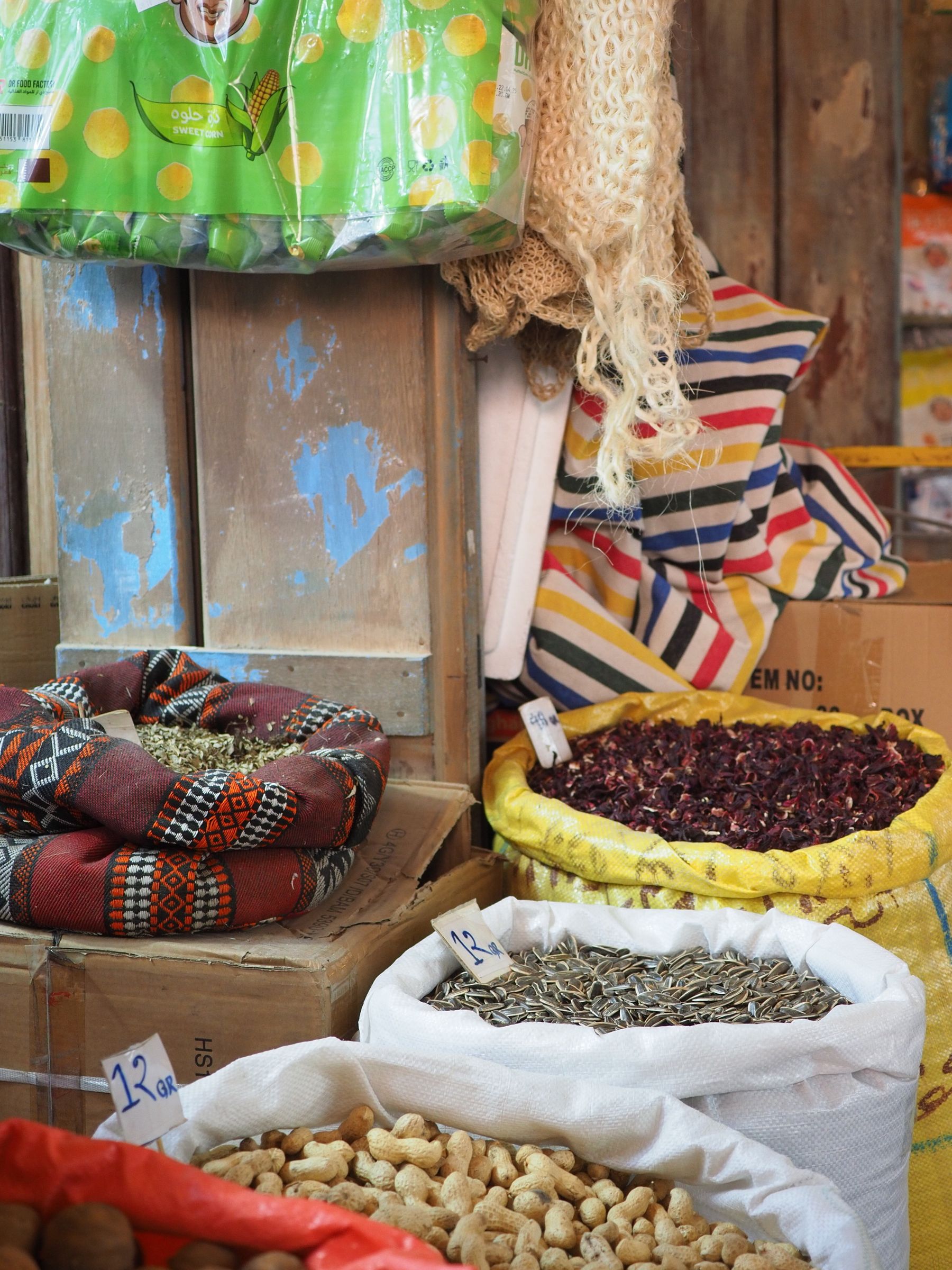
When a supplier sees a kitchen's real orders, he loads what will be cooked, and SDG 12.3 counts both the loss in his van and the waste in the kitchen.
How Wady helps with SDG 12.3 in Qatar
Wady gives a kitchen in Qatar the records that the steps above need: orders, counts and waste in one place. Over 100 businesses in Qatar already use Wady.
For us this is more than software. Our mission is to cut food waste in the Gulf by digitizing the order between a kitchen and the suppliers it already buys from. Our vision is a Gulf food supply chain where every order is visible, so suppliers and kitchens see demand before it arrives, order what will be used, and throw less away. Food grown for what people will eat, not for a guess. One tomato's story shows how food goes missing one small step at a time, from the farm to the plate.
What it does
Purchase System (free): all your suppliers in one app, and every order saved with its items, quantities and prices. See the Purchase System.
Waste (Wady Central): a shift's waste in one entry, with your reasons, and waste cost by period, reason and item. See stock counts and waste.
Counts (Wady Central): count on paper or on screen, in sacks and grams.
Production (Wady Central): plan from real orders, minus what is in stock.
What it does not do
Wady does not forecast demand; every figure is arithmetic on real records. It does not measure national food waste, report to the UN or fix a cold chain. Wady Central has no POS API connection yet, so it works alongside your POS.
Who it is for
Restaurants, cafes, hotels and catering kitchens in Qatar, from one cafe to a group with a central kitchen. Wady works in Qatar only for now.
Related articles
How much food does Qatar waste? The sourced numbers and where waste starts
Qatar's National Food Security Strategy 2030: what it means for restaurants and food suppliers
Food loss vs food waste: what is the difference, and why it matters for the Gulf
How to measure food waste in a restaurant kitchen: a step-by-step waste audit
Ramadan food waste in Qatar: why so much is left over, and how to plan better
Start with your own kitchen's number
Message us on WhatsApp at +974 7000 7658 for a Wady Central walkthrough, or read more on Wady Central. The free Purchase System is at order.wady.ai, on the App Store and on Google Play. Qatar only for now.
Frequently asked questions
Your kitchen's stock, recipes and costing, with numbers from real records.


