How to measure food waste in a restaurant kitchen: a step-by-step waste audit
By Asaad Al Hashmi, Founder and CEO of Wady

To measure food waste in a restaurant, run a one-week audit: sort everything you throw away into four bins (spoilage, prep, overproduction and plate), weigh each bin at the end of every shift, then divide the total by the covers you served and compare its cost with what you bought that week. One normal week gives you a baseline in grams per cover and in riyals.
It is eleven at night and service is over. A commis lifts the overproduction bin onto the scale: rice cooked for a rush that never came. Nobody gets blamed. He writes the number on the sheet, and tomorrow the chef cooks a smaller first batch. A number gives the team something to decide, so nobody carries the guilt home.
For the daily waste log and the waste percentage formula, see how to track food waste.
Checked October 2026.
We are Wady. We make the free Purchase System and Wady Central for kitchens in Qatar, so the last part of this guide shows where Wady helps with measuring waste and where it does not.
Key takeaways
Sort kitchen waste into four streams: spoilage, prep, overproduction (food cooked but never served) and plate.
Weigh each stream every shift for at least one normal business week, the minimum UNEP's guidance uses for food service.
Divide the total by covers for grams per cover, put a riyal value on every kilo, and compare that cost with your purchases.
No Qatar or GCC per-cover study exists yet; the closest published references are Irish (263 g per cover in full-service restaurants, 2016 to 2018 data) and British.

In Irish full-service restaurants, prep made up 44% of food waste and plate waste 41%, while UK hospitality data put prep at 45%.
Why measure food waste before you try to cut it?
Measuring first shows which bin costs you the most, so the first fix goes where the money is. In a study of 114 restaurant sites in 12 countries, the restaurants saved about $7 for every $1 they put into cutting food waste over three years, and cut kitchen waste by 26% on average in the first year (Champions 12.3, February 2019). The same report found that overproduction is often a large share of what restaurants throw away.
The UK picture: WRAP estimates that the UK hospitality and food service sector throws away almost one fifth of the food it buys, 1.1 million tonnes a year, and its advice to the sector starts with Target, Measure, Act (WRAP, November 2024).
The world picture: food service wasted about 290 million tonnes of food in 2022, 28% of all food wasted (UNEP Food Waste Index Report 2024). For Qatar, see how much food Qatar wastes.
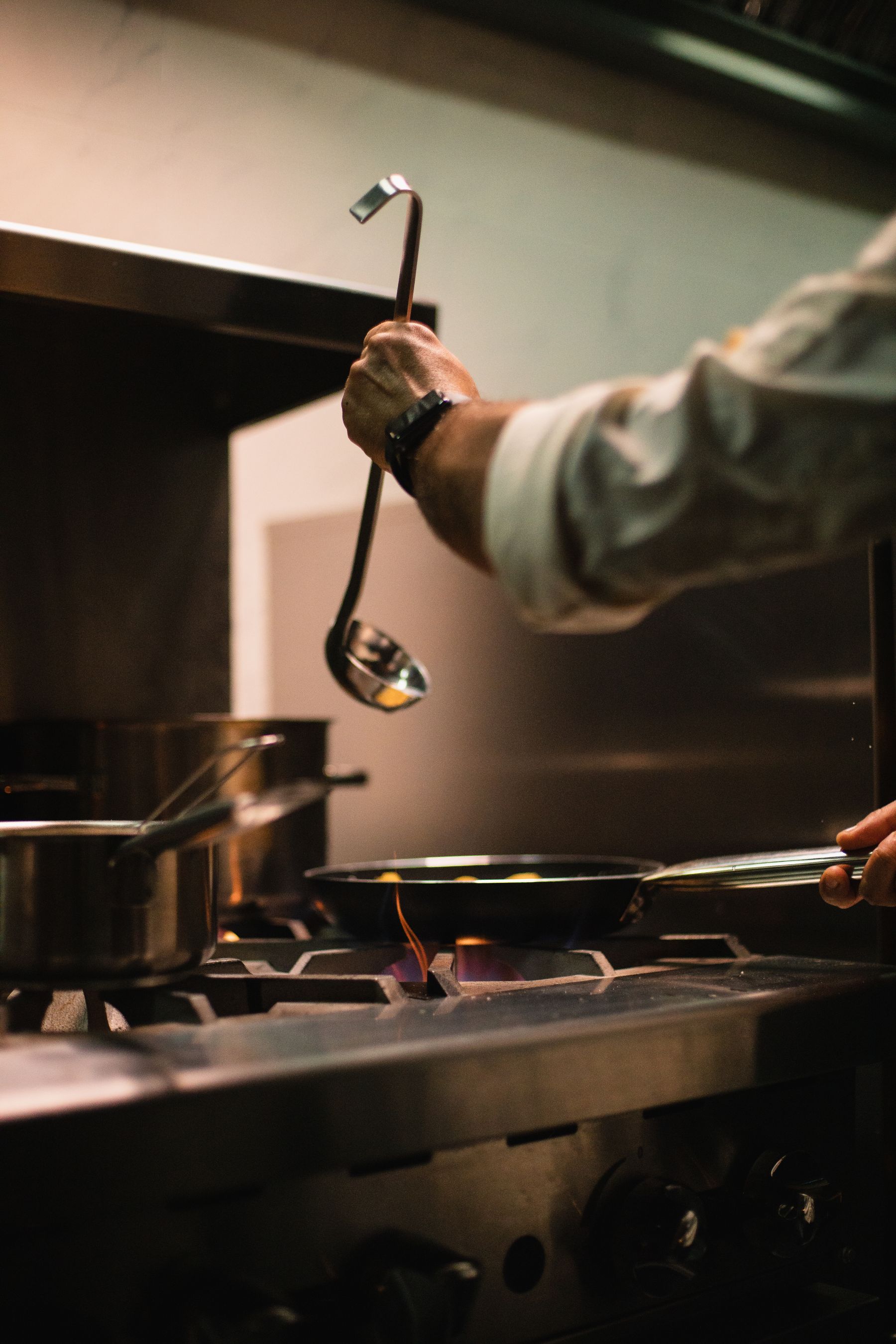
In a 2019 study of 114 restaurant sites, restaurants saved about $7 for every $1 spent cutting food waste over three years.
What counts as food waste in a restaurant kitchen?
Food waste in a kitchen is any food you bought to serve and then threw away. For an audit, split it into four streams, because each one has its own cause and its own fix.
Spoilage: stock that went off, expired or got damaged before anyone cooked it.
Prep waste: peel, trim, offcuts and prep mistakes, plus food dropped or burnt on the line.
Overproduction: food cooked but never served, such as rice left in the pot at close or buffet trays cleared at the end. Ireland's EPA calls this stream "unserved".
Plate waste: what guests leave on the plate.
If you cost recipes on usable yield, normal trim already sits in the dish price, so look for trim above your usual (how to calculate yield percentage). Keep oil, packaging and non-food out of the bins.
How do you run a food waste audit, step by step?
Run the audit for one normal week: weigh four labelled bins at the end of every shift, and record covers and purchases for the same days. UNEP's guidance for food service samples preparation, serving and plate waste "for a duration of at least one business week", then divides by covers for an average per meal (UNEP Food Waste Index Report 2024).
1. Pick one normal week
Skip Ramadan, Eid and big events, unless you want a separate baseline for them.
2. Put four labelled bins where the waste happens
Spoilage at the store, prep at the prep tables, overproduction near the pass or buffet, plate at the dish station.
3. Weigh each bin at the end of every shift
UNEP rates direct weighing as high accuracy and low cost when the streams are kept apart. A platform scale is enough: take off the empty bin's weight and write the date, shift, stream and kilos.

UNEP rates direct weighing as a high accuracy, low cost way to measure food service waste when each stream goes in its own bin.
4. Write a reason next to the big lines
Give any line over about one kilo a short reason: expired, over-ordered, cooked too early, portion too big.
5. Tell the team nobody gets blamed
Champions 12.3 found that hand measurement tends to undercount waste. Say before day one that the numbers are about the kitchen, not a person.
6. Take covers and purchases for the same days
Take covers from your POS, which UNEP rates as the high accuracy way to compare days and sites (sales value is the rougher option). For purchases, add up your saved supplier orders or invoices for the week.
How do you turn the weights into numbers you can compare?
Turn the week's weights into three numbers: grams per cover, waste cost, and waste cost as a share of purchases.
Grams per cover: total kilos wasted x 1,000, divided by covers served, for the total and for each stream.
Waste cost: kilos in each stream x cost per kilo. Price spoilage and prep at what you paid, and overproduction and plate at the dish's ingredient cost.
Waste as a share of purchases: waste cost divided by purchases for the week, x 100.
Example, with made-up numbers: a restaurant serves 1,000 covers in a week and weighs 220 kg of waste, so 220 g per cover. The waste is worth QAR 1,650, and the week's purchases were QAR 30,000, so waste equals 5.5% of purchases. These numbers show the math, not a benchmark. Purchases are a quick stand-in for one week; the exact waste percentage divides by the cost of food used, as in how to track food waste.
What is a normal amount of food waste per cover?
No Qatar or GCC benchmark exists yet: we found no published per-cover study for restaurants in Qatar or the Gulf. The closest primary figures are Irish and British, with old data, so treat them as a reference, not a target.
Ireland, full-service restaurants: 263 g per cover, of which prep 44%, unserved 14% and plate 41% (EPA Ireland, 2016 to 2018 data, EU Platform webinar, November 2020).
Ireland, quick-service restaurants: 146 g per cover (same study).
Ireland, hotels: 360 g per cover for daily service and 530 g at functions (same study).
UK hospitality and food service: spoilage 21%, prep 45%, plate 34%, and 75% of it could have been eaten (WRAP, November 2013, 2011/12 data).
Hotels in Ramadan 2025: Hilton reported that plate waste fell from 87 g to 64 g per cover between week 1 and week 4 of Ramadan, across 45 hotels in 14 countries (Hilton, May 2025). That is the company's own figure, for plate waste only.
Shared platters and buffets change the numbers, so your own first week is the number to beat. Qatar's national study of food loss and waste across the supply chain was due to run until September 2026, and we found no published results as of October 2026 (The Peninsula, April 2026).
Which waste stream should you fix first?
Start with the stream that costs the most riyals, then match the fix to the stream.
Overproduction: cook to real orders
Cook smaller batches near the end of service. In a central kitchen, plan each day from orders minus stock, as in the daily production plan.
Plate waste: check the portion
At a weekend lunch, a father asks the waiter to pack the leftover mandi for home. A kitchen that knows its plate waste per cover can offer a portion that fits, or a box without being asked, and the guest's generosity stays at the table.

Plate waste was 41% of food waste in Irish full-service restaurants, so portion size is one of the first things an audit checks.
Spoilage: order and receive closer to use
Compare each order with what you used, and check deliveries at the door (goods receiving procedure).
Prep: watch trim above usual
Check yield on the items with the most trim. Repeat the audit after a month and compare grams per cover.
How Wady helps with measuring food waste
Wady keeps the records an audit needs after the first week: what you bought, and what you threw away with a reason. Over 100 businesses in Qatar already use Wady.
Our mission is to cut food waste in the Gulf by digitizing the order between a kitchen and the suppliers it already buys from. Our vision is a Gulf food supply chain where every order is visible, so suppliers and kitchens see demand before it arrives, order what will be used, and throw less away. Food grown for what people will eat, not for a guess. Every kilo in the spoilage bin was grown, picked and shipped by someone, as one tomato's story shows.

Every kilo in a kitchen's spoilage bin was grown, picked and shipped first, so ordering closer to real use saves food all the way back to the farm.
What it does
Purchase System (free): all your suppliers in one app, every order saved with its items, quantities and prices, and what each branch spent by supplier, the day it happens. That gives you the purchases figure for the audit week. See the Purchase System.
Waste (Wady Central): a shift's waste in one entry, with your reasons, and waste cost by period, reason and item. See counts and waste.
Recipes (Wady Central): costed on usable yield after trim, so normal prep loss sits in the price.
Production (Wady Central): plan from real orders, minus what is in stock.
What it does not do
Wady does not weigh food or connect to a scale: you weigh, then record. It does not count covers, so take them from your POS; Wady Central works alongside your POS and has no POS API connection yet. It does not forecast demand; every figure is arithmetic on real records.
Who it is for
Restaurants, cafes, hotels and catering kitchens in Qatar, from one cafe to a group with a central kitchen. Wady works in Qatar only for now.
Related articles
How much food does Qatar waste? The sourced numbers and where waste starts
Daily Production Plan for a Central Kitchen: Steps and Format
Goods Receiving Procedure: How to Check and Record a Supplier Delivery
Start your waste audit this week
Message us on WhatsApp at +974 7000 7658 for a Wady Central walkthrough. The free Purchase System is at order.wady.ai, on the App Store and on Google Play. Qatar only for now.
Frequently asked questions
Your kitchen's stock, recipes and costing, with numbers from real records.


