Qatar's National Food Security Strategy 2030: what it means for restaurants and food suppliers
By Asaad Al Hashmi, Founder and CEO of Wady

Qatar's National Food Security Strategy 2030 is the State's plan to keep food on Qatar's tables through three pillars: local production and markets, strategic reserves with early warning, and international trade and investment. The Prime Minister launched it on 11 December 2024 with 17 initiatives and 146 measures (QNA, December 2024). We found no rule in it that tells a restaurant what to buy, but it shapes what your suppliers grow, store and import.
Picture a winter morning at a farm gate. A grower loads crates of tomatoes he picked at dawn, still cool from the night. The strategy wants more of them on menus in Doha. Whether they get eaten or go soft in a storeroom depends on a kitchen that knows what it has and orders what it will use.
Checked October 2026. Below: the pillars, the 2030 targets, what changed since 2018 to 2023, and five steps for this month.
We are Wady. We make the free Purchase System and Wady Central for kitchens in Qatar, so the last part of this guide shows where Wady helps and where it does not.
Key takeaways
The Prime Minister launched Qatar's National Food Security Strategy 2030 on 11 December 2024, with 3 pillars, 17 initiatives and 146 measures.
By 2030 it targets 55% self-sufficiency in fresh strategic vegetables (39% in 2024), 70% in table eggs and 80% in fresh fish, according to QNA in August 2025.
It aims to cut the food waste rate by 30%, cut food garbage by 50%, and treat 55% to 70% of food waste and garbage with sustainable solutions, according to QNA in August 2025; a national programme is in preparation.
We found no rule in the strategy that requires restaurants to buy local; it works through farms, reserves and imports.

Qatar's earlier strategy, 2018 to 2023, estimated waste at about 2% on farms, 9% at the central market, 9% at wholesalers, 3% at retailers and over 10% with end consumers.
What is Qatar's National Food Security Strategy 2030?
The strategy is Qatar's plan for producing, storing and importing its food until 2030. The Ministry of Municipality's Food Security Department prepared it "in close cooperation with relevant authorities from the public and private sectors" (QNA, December 2024).
Who launched it, and when
The Prime Minister, HE Sheikh Mohammed bin Abdulrahman bin Jassim Al Thani, launched it on 11 December 2024 (Government Communications Office). Dr. Masoud Jarallah Al Marri, Director of the Food Security Department, described it as 17 initiatives over three pillars, supported by 146 measures.
Its five guiding principles
Healthy consumption habits.
Food safety and quality.
Sustainability.
Adapting to climate change.
Effective partnerships.
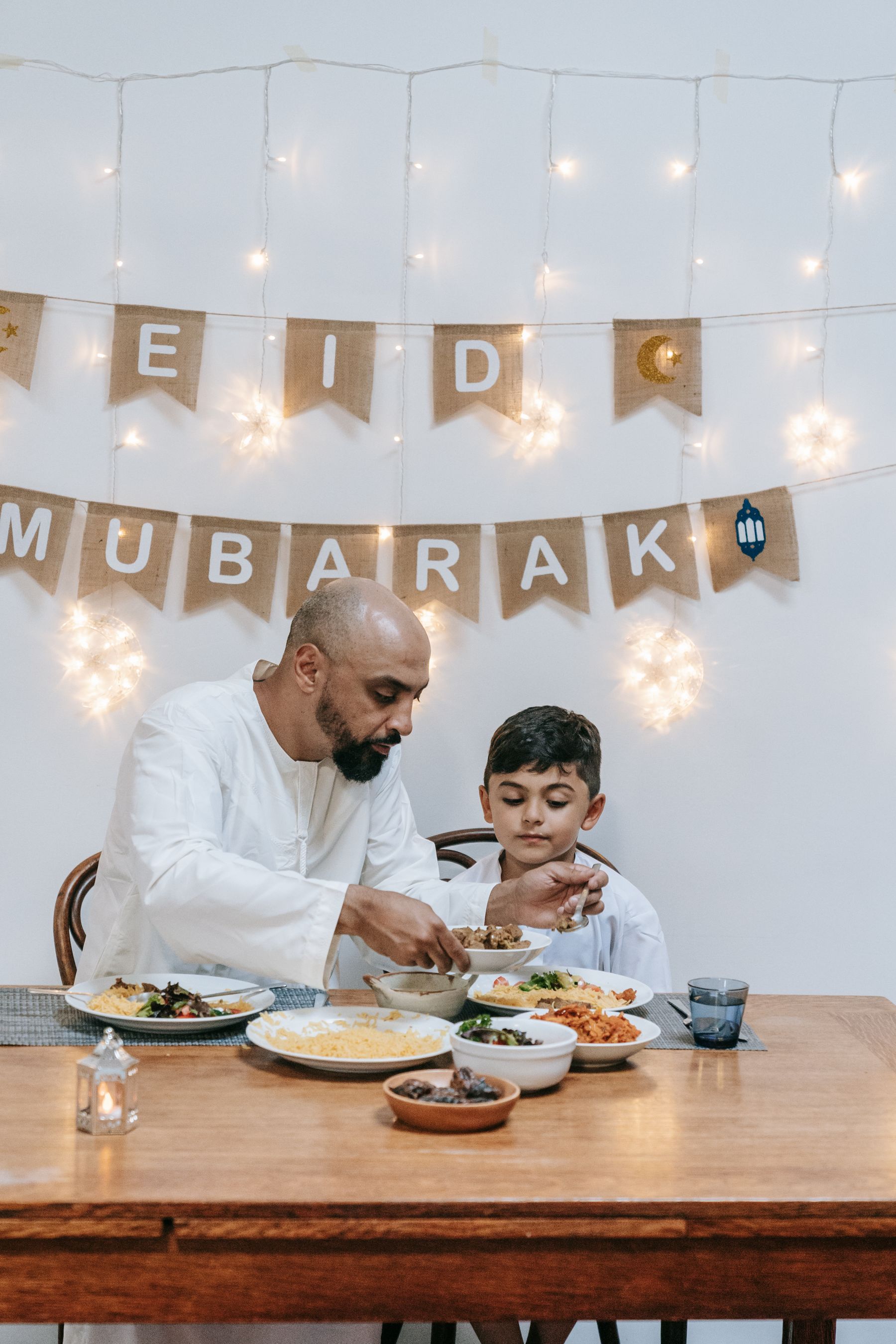
Qatar's 2030 food security strategy lists healthy consumption habits and sustainability among its five guiding principles.
What are the three pillars of Qatar's food security strategy?
The three pillars are local production and local markets, strategic reserves and early warning systems, and international trade and investment.
1. Local production and local markets
The strategy backs domestic production "that align with market demands" (GCO). For farmers it promises "optimising pricing mechanisms, safeguarding local products and reinforcing their competitiveness against imports".
For your kitchen: if the targets hold, you will see more local vegetables, eggs and fish on your suppliers' lists.

Qatar's 2030 strategy aims for 55% self-sufficiency in fresh strategic vegetables, up from 39% in 2024.
2. Strategic reserves and early warning
This pillar will "improve and expand the strategic stock of food commodities" and "develop central alert systems" (QNA, December 2024).
Grown locally: staple vegetables, fresh milk and its products, fresh poultry, table eggs, fresh fish and fresh red meat.
Held in a strategic stockpile: wheat, sugar, rice, edible oils and frozen poultry (QNA, August 2025).
For your kitchen: your dry staples sit on a national safety net; your fresh items lean more on Qatar's farms.
3. International trade and investment
The third pillar diversifies "import sources" and plans to "expand the storage facilities at Hamad Port, transforming it into a regional hub for food trade and manufacturing" (QNA, December 2024).
For your kitchen: the same imported product may arrive from a new country or under a new brand.
What are Qatar's food security targets for 2030?
The 2030 targets below come from QNA, the official news agency, quoting the Food Security Department in August 2025 (QNA, August 2025). The full strategy text is not public.
Fresh strategic vegetables: 39% self-sufficiency in 2024, target 55%.
Table eggs: 30% now, target 70%.
Fresh fish: above 65% now, target 80%.
Sheep and goat meat: target 30%, with red meat at 14% now.
Dairy and fresh poultry: about 98% now, to be kept there.
Water: cut groundwater use for farming by 70% and water per ton of crops by 40%.
Food waste: cut the food waste rate by 30% and food garbage by 50%, and treat 55% to 70% of food waste and garbage with sustainable solutions (QNA Arabic, August 2025).
Does the strategy set a food waste target?
Yes. According to Qatar News Agency (QNA, August 2025), quoting the Ministry of Municipality's Food Security Department, the strategy aims to cut the food waste rate by 30%, cut food garbage by 50%, and treat 55% to 70% of food waste and garbage with sustainable solutions. The government launch page gives no figure. Also confirmed:
A national study: Qatar University's SESRI, with the Ministry of Municipality, FAO and UNEP, was due to measure loss and waste across the supply chain until September 2026, and we found no published results as of October 2026 (The Peninsula, April 2026).
A national programme: in June 2026, Undersecretary Eng. Ali bin Mohammed Al Ali said Qatar is preparing "an integrated national program" to reduce food loss and waste (QNA, June 2026).
The global goal: UN SDG 12.3 aims to halve food waste by 2030 (UNEP).
For the numbers we do have, read how much food Qatar wastes.
How is the 2030 strategy different from the 2018 to 2023 strategy?
The 2030 strategy has fewer pillars, more initiatives and a bigger place for waste. The 2018 to 2023 strategy, published by the Food Security Department in January 2020, is public.
2018 to 2023: four pillars (trade and logistics, domestic self-sufficiency, strategic reserves, domestic markets) and 13 initiatives. Waste sat inside domestic markets as a KPI: cut it by 5 percentage points by 2023.
2030: three pillars, 17 initiatives and 146 measures. Sustainability and healthy consumption are guiding principles, and a loss and waste study was signed on launch day.
Where food was lost, by the earlier estimate
The earlier strategy estimated how much food was wasted at each stage of the chain (p.17):
Farmers: about 2%.
Central market: about 9%.
Wholesalers: about 9%.
Retailers: about 3%.
End consumers: over 10%.
For hotels, restaurants and caterers, it proposed "a food bank program with HORECA" and a waste collection programme. The national study, due to finish in September 2026, is meant to replace these estimates once its results are published.
What does the strategy mean for restaurants and cafes?
We found no rule in the strategy that requires restaurants or cafes to buy local, hold stock or report waste. It changes the market around you, and four habits help your kitchen keep up.
Buy local when it is in season
Ask each supplier which items are local this week. Local produce reaches your kitchen sooner after harvest.
Know what is on your shelves
The country keeps a reserve; your kitchen keeps a count. A scheduled stock count tells you what sits too long before it spoils. See how to do a stock count.
Measure your own waste
Measure your kitchen this week: what goes in the bin, how much and why. See how to track food waste.
Keep every order on record
An order history with items, quantities and prices lets you sort what you buy local from what you import, and shows when prices move.

We found no rule in Qatar's 2030 food security strategy that requires restaurants to buy local produce.
What does the strategy mean for food suppliers?
For suppliers, the strategy means a bigger local share, imports from more countries and a role in national storage.
A bigger local share
If eggs move from 30% to 70% local and vegetables from 39% to 55%, your buyers will ask for more local lines.
Imports from more sources
The same product may come from new countries, and your buyers will want to see the change on the order before delivery.
A role in strategic stock
QNA reports that the private sector "participates actively in strategic food stock projects by managing storage and recycling operations" (QNA, August 2025).
Orders as early demand
At 5 a.m., a driver loads the van. When it is packed from the kitchens' orders, and not from a guess, less comes back unsold.

Qatar's 2030 strategy holds wheat, sugar, rice, edible oils and frozen poultry in a strategic stockpile.
What can a kitchen do this month?
None of these five steps waits for a new rule.
Sort last month's orders into local and imported, item by item.
Ask your suppliers for their local lines and delivery days, and switch an item when the local one is in season.
Count stock on a schedule: your most costly items weekly, everything monthly.
Record waste with a reason every shift, and read the totals by reason and item each week.
Order from real use, and give safe surplus away. Hifz Al Naema collected 21,936 surplus meals in February 2025 alone (The Peninsula, March 2025).
How Wady helps with food security in your kitchen
Wady keeps the records steps 1, 3, 4 and 5 need. Over 100 businesses in Qatar already use Wady.
For us this is more than software. Our mission is to cut food waste in the Gulf by digitizing the order between a kitchen and the suppliers it already buys from. Our vision is a Gulf food supply chain where every order is visible, so suppliers and kitchens see demand before it arrives, order what will be used, and throw less away. Food grown for what people will eat, not for a guess. One tomato's story shows how food gets lost between a farm and a plate, one small step at a time.
What it does
Purchase System (free): all your suppliers in one app, and every order saved with its items, quantities and prices. See the Purchase System.
Waste (Wady Central): a shift's waste in one entry, with your reasons, and waste cost by period, reason and item.
Counts (Wady Central): count on paper or on screen, in sacks and grams. See counts and waste.
Production (Wady Central): plan from real orders, minus what is in stock.
What it does not do
Wady does not grow, import or store food, or pick suppliers for you; you order from the ones you already use. It does not forecast demand; every figure is arithmetic on real records. Wady Central has no POS API connection yet, so it works alongside your POS.
Who it is for
Restaurants, cafes, hotels and catering kitchens in Qatar, from one cafe to a group with a central kitchen. Wady works in Qatar only for now.
Related articles
Start with your orders
The free Purchase System puts all your suppliers in one app and saves every order: order.wady.ai, the App Store or Google Play. For counts and waste, message us on WhatsApp at +974 7000 7658 for a Wady Central walkthrough. Qatar only for now.
Frequently asked questions
Your kitchen's stock, recipes and costing, with numbers from real records.


