
For a restaurant, café, hotel or caterer in Qatar, reliable supplier order tracking means one place that records what you ordered, from whom, its status, what arrived against what you ordered, and what price you paid. The Wady Purchase System keeps every order, supplier, status and price on record, and lets you record what actually arrived, for free, on iOS, Android and the web. One thing first: Wady is not a courier or freight tracking service. To follow a parcel or a container on the road, use the carrier's own tracking. This guide covers what to track, how WhatsApp, spreadsheets and ordering apps compare, and how to start this week.
Key takeaways
Reliable order tracking is one record of what you ordered, from whom, its status, what arrived and the price you paid.
Wady tracks orders, not shipments, vehicles or parcels.
Track eight fields on every order: supplier, items, quantity ordered, agreed price, delivery date, status, quantity received and who placed it.
The Wady Purchase System is free for buyers, and you can add suppliers who are not on Wady yourself.
Do you mean tracking a shipment, or tracking an order?
Two different jobs share one name. Shipment tracking follows a package or container from A to B. Order tracking follows a purchase from the moment you decide to buy until the invoice is paid. The Ministry of Public Health's electronic food safety system, Watheq, registers food establishments, products and shipments. For reordering, see automated purchase orders.
Most kitchen managers asking this question mean the second one. Their daily questions: did the supplier get my order, did they confirm it, did the right goods arrive, and was the price what we agreed?
Wady covers order tracking. It does not track vehicles, parcels or freight, and it does not give a live delivery map. If you import goods yourself and wait on a shipment, the shipping line or courier tracks it for you. Then Wady takes over at your order and your receiving.
How do restaurants in Qatar track supplier orders today?
Most use WhatsApp, phone calls and paper. Orders go out in a group chat, a voice note or a call, and the "record" is a scroll back through messages or a delivery book at the back door. That is what operators in Qatar told us, not a measured study.
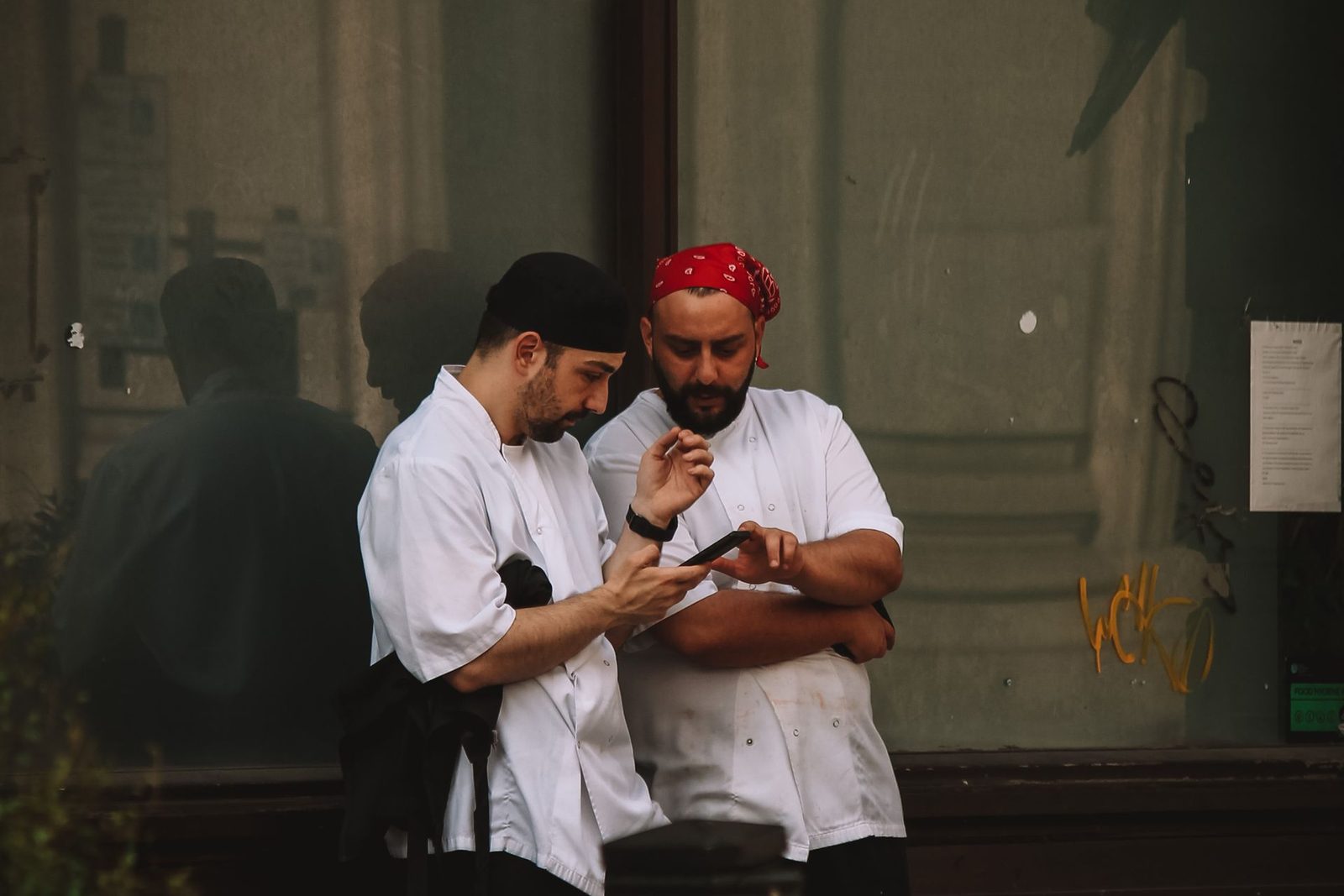
It works until a delivery goes wrong. These are the breaking points:
No clean record. A delivery arrives wrong and there is nothing to point to.
Ordering from memory. The catalogue is not in front of you, so items get missed.
Price checks by message. You ask the supplier what today's price is, just to check.
Nobody sees spend. What a branch spent is unknown until the invoices land, sometimes three weeks later.
Five places that disagree. The chef's memory, a WhatsApp group, the delivery book, a spreadsheet on one laptop and the supplier's invoice.
WhatsApp is fast and your team already knows it. Its weak point is the record: a chat does not hold an order's status, price and quantity in one place. For a full comparison, see WhatsApp vs one app.
What does reliable order tracking need?
It needs six things. Use this as a checklist when you compare any tool, including ours.
Every order saved with items, quantities and prices. Not a chat. A record you can open later.
A status you can read. Sent, accepted, delivered. Not "I think they got it".
Who placed it. Every order shows a name, so there is no "someone ordered that".
Ordered versus received. What arrived, checked against what you asked for.
Price you actually paid. And a flag when a price moves.
Search and filters. By supplier, by date, by status, by branch, so a past order takes seconds to find.
If a tool misses number 4 or 5, you are still reconciling by hand at month-end. Qatar's Ministry of Public Health published a Food Safety Practices Guide for Food Services that includes traceability and recall requirements. For a new cafe, see the software a cafe in Qatar needs.
What should you track on every supplier order?
Track eight fields. Write them down even if you use paper for now.
Field | Why it matters |
|---|---|
Supplier | Who owes you the goods |
Items and pack size | What exactly you asked for |
Quantity ordered | The number to check against on delivery |
Agreed price | The price you will be charged |
Delivery date | When you expect it |
Status | Sent, accepted, delivered |
Quantity received | What actually arrived |
Who placed it | Accountability |
WhatsApp and paper vs a spreadsheet vs an ordering app
WhatsApp, calls and paper | Spreadsheet | Ordering app | |
|---|---|---|---|
Record of the order | Scattered across chats and a delivery book | Clean once someone types it in | Saved when the order is sent |
Status | Read the chat and guess | Whatever you update by hand | Shown on the order, from sent to delivered |
Who placed it | Ask around | Only if someone writes it down | Shown on every order |
Prices | Checked by message | Typed by hand | Your agreed prices, already loaded |
Finding a past order | Scroll | Search, if it was entered | Filter by status, date or supplier |
Best at | Speed and habit | Your own analysis | Placing and recording orders in one step |
A spreadsheet is good for analysis. It does not know an order was sent. An ordering app records the order at the moment you place it, so nothing is typed twice.
How do you check what arrived against what you ordered?
You compare the delivery with the order, line by line, before the driver leaves. That is the receiving step, and it is where most losses hide: a short carton, a swapped brand, a price that moved. ServSafe, the National Restaurant Association's food safety program in the US, says to check temperatures with a thermometer at receiving and to accept cold food at 5°C or lower (ServSafe receiving criteria).
The free Purchase System keeps the order record your team checks against (items, quantities and prices) and lets you record what actually arrived. For groups that want receiving tied to stock and costing, Wady Central is the paid product. In Wady Central, receiving is confirming, not typing. Price rises and falls are flagged on delivery, and the owner's report shows ordered next to received. Its Daily Brief can also surface a supplier that is a day past the delivery date, with the value of the lines still not received.
Wady Central is priced from QAR 299 per outlet per month, early adopter price, and it runs from one café up to a multi-branch group with a central kitchen. See pricing.
How Wady helps with supplier order tracking
How does the Wady Purchase System track supplier orders?
The Wady Purchase System keeps every order in one list, with items, quantities and prices, and shows its status from sent to delivered. It is free for restaurants, cafés, hotels and catering kitchens in Qatar. Wady charges the suppliers, never the buyer. Stock, recipes and costing sit in the paid Wady Central. Suppliers can take orders in the paid Order Management System.
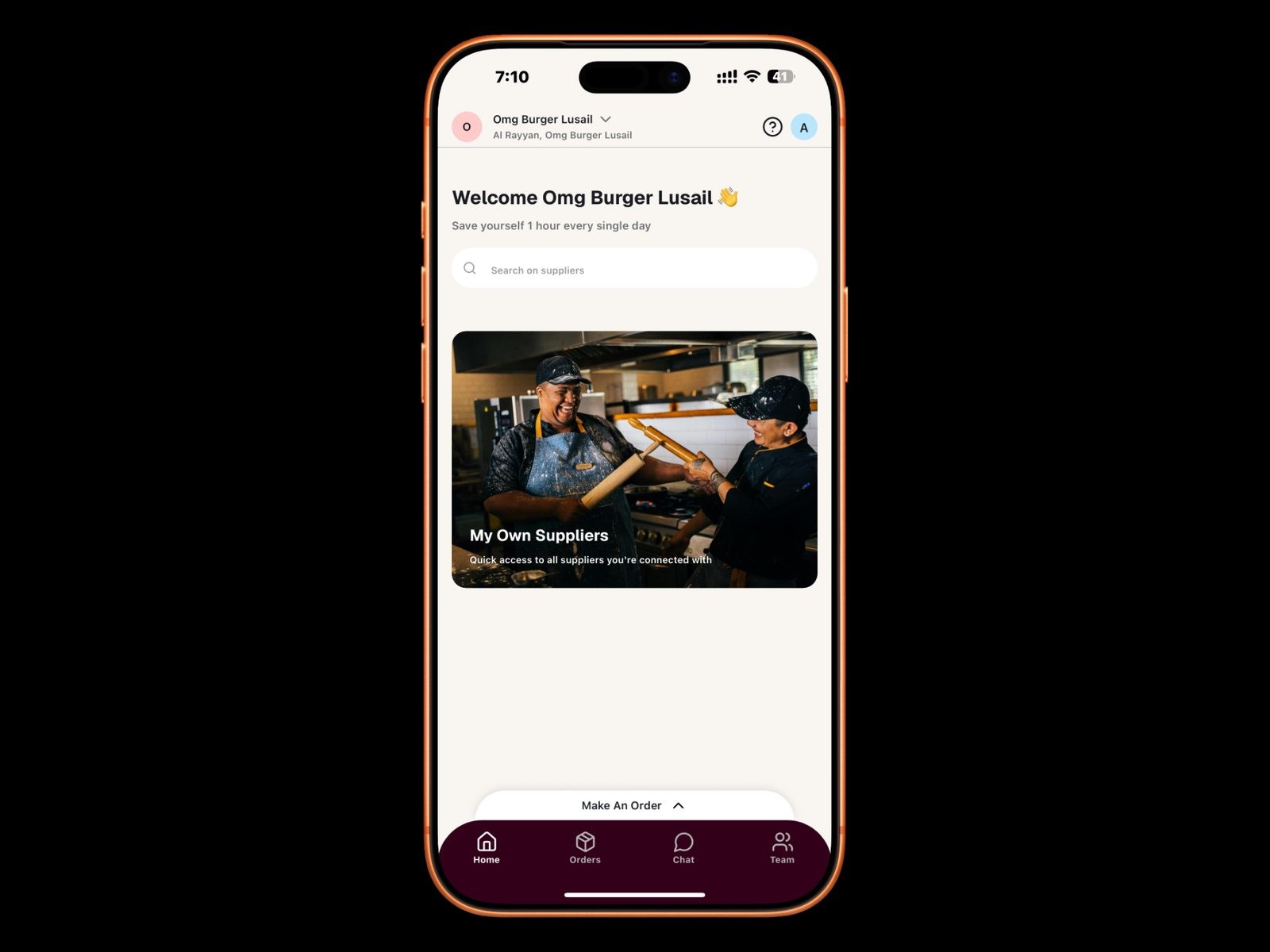
Here is what you get on the tracking side:
Ongoing and past orders in one list. Filter by status, date or supplier.
Every item, quantity and price kept. The purchase order sits on the order.
Who placed it. Every order shows the person, and everyone has their own login with a role: admin, staff or contributor.
Chat beside the order. Message the supplier in the app, and the order sits next to the conversation.
Spend by branch and by supplier. The price you actually paid, the day it happens, not at month-end.
One supplier, several branches. Switch branch in one tap.
You place the order in four steps: pick the supplier, fill the basket with your prices, choose a delivery date from their real delivery days, send it. The supplier gets it straight away and you both hold the same record.
Mohsin, Head of Operations at Crave Holding, says: "Wady acts as a central operating system that tracks every single order in real-time. It saves us time, saves money, and the entire platform is completely free."
Over 100 businesses in Qatar already use Wady, including Crave Holdings and OMC. It is rated 5.0 on the App Store.
What if my supplier is not on Wady?
You add them yourself, with their products and prices. The purchase order goes out by email and you are copied on it. The order is still saved in your list, so the record is yours from day one. Nothing about your deals changes: same suppliers, same prices.
One honest note. Buyers told us suppliers often live on WhatsApp and calls and miss emails. If a supplier is on Wady, they get the order straight away. If they are not, tell them an email is coming.
How do you start tracking supplier orders this week?
You can start in an afternoon. The Purchase System takes about five minutes to set up.
Set up your account. Your business, your brands, your branches.
Tell us your suppliers. We bring them on, and you add your own yourself.
Place your next order in the app. We train your team.
Until then, keep the eight-field list above, even on paper. A record you write beats one you remember.
Try your next order in the app
Download the Wady B2B app or open order.wady.ai, and place your next supplier order where it is recorded. Message the Wady team on WhatsApp +974 7000 7658 and we will set it up with you on your own suppliers.
Frequently asked questions
All your orders from your suppliers in one place, free forever.


